
182 lines
5.3 KiB
Markdown
182 lines
5.3 KiB
Markdown

|
|
[](https://goreportcard.com/report/github.com/deckarep/golang-set/v2)
|
|
[](http://godoc.org/github.com/deckarep/golang-set/v2)
|
|
|
|
# golang-set
|
|
|
|
The missing `generic` set collection for the Go language. Until Go has sets built-in...use this.
|
|
|
|
## Update 3/5/2023
|
|
* Packaged version: `2.2.0` release includes a refactor to minimize pointer indirection, better method documentation standards and a few constructor convenience methods to increase ergonomics when appending items `Append` or creating a new set from an exist `Map`.
|
|
* supports `new generic` syntax
|
|
* Go `1.18.0` or higher
|
|
* Workflow tested on Go `1.20`
|
|
|
|

|
|
|
|
Coming from Python one of the things I miss is the superbly wonderful set collection. This is my attempt to mimic the primary features of the set collection from Python.
|
|
You can of course argue that there is no need for a set in Go, otherwise the creators would have added one to the standard library. To those I say simply ignore this repository and carry-on and to the rest that find this useful please contribute in helping me make it better by contributing with suggestions or PRs.
|
|
|
|
## Install
|
|
|
|
Use `go get` to install this package.
|
|
|
|
```shell
|
|
go get github.com/deckarep/golang-set/v2
|
|
```
|
|
|
|
## Features
|
|
|
|
* *NEW* [Generics](https://go.dev/doc/tutorial/generics) based implementation (requires [Go 1.18](https://go.dev/blog/go1.18beta1) or higher)
|
|
* One common *interface* to both implementations
|
|
* a **non threadsafe** implementation favoring *performance*
|
|
* a **threadsafe** implementation favoring *concurrent* use
|
|
* Feature complete set implementation modeled after [Python's set implementation](https://docs.python.org/3/library/stdtypes.html#set).
|
|
* Exhaustive unit-test and benchmark suite
|
|
|
|
## Trusted by
|
|
|
|
This package is trusted by many companies and thousands of open-source packages. Here are just a few sample users of this package.
|
|
|
|
* Notable projects/companies using this package
|
|
* Ethereum
|
|
* Docker
|
|
* 1Password
|
|
* Hashicorp
|
|
|
|
## Star History
|
|
|
|
[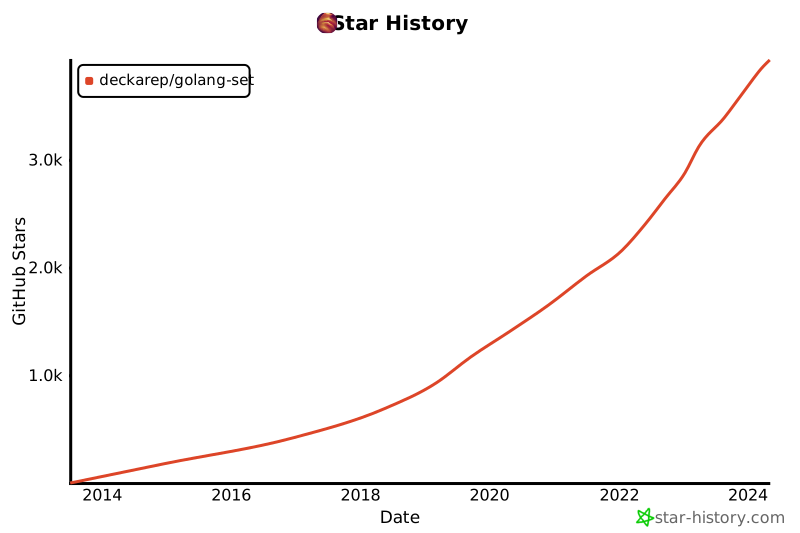](https://star-history.com/#deckarep/golang-set&Date)
|
|
|
|
|
|
## Usage
|
|
|
|
The code below demonstrates how a Set collection can better manage data and actually minimize boilerplate and needless loops in code. This package now fully supports *generic* syntax so you are now able to instantiate a collection for any [comparable](https://flaviocopes.com/golang-comparing-values/) type object.
|
|
|
|
What is considered comparable in Go?
|
|
* `Booleans`, `integers`, `strings`, `floats` or basically primitive types.
|
|
* `Pointers`
|
|
* `Arrays`
|
|
* `Structs` if *all of their fields* are also comparable independently
|
|
|
|
Using this library is as simple as creating either a threadsafe or non-threadsafe set and providing a `comparable` type for instantiation of the collection.
|
|
|
|
```go
|
|
// Syntax example, doesn't compile.
|
|
mySet := mapset.NewSet[T]() // where T is some concrete comparable type.
|
|
|
|
// Therefore this code creates an int set
|
|
mySet := mapset.NewSet[int]()
|
|
|
|
// Or perhaps you want a string set
|
|
mySet := mapset.NewSet[string]()
|
|
|
|
type myStruct struct {
|
|
name string
|
|
age uint8
|
|
}
|
|
|
|
// Alternatively a set of structs
|
|
mySet := mapset.NewSet[myStruct]()
|
|
|
|
// Lastly a set that can hold anything using the any or empty interface keyword: interface{}. This is effectively removes type safety.
|
|
mySet := mapset.NewSet[any]()
|
|
```
|
|
|
|
## Comprehensive Example
|
|
|
|
```go
|
|
package main
|
|
|
|
import (
|
|
"fmt"
|
|
mapset "github.com/deckarep/golang-set/v2"
|
|
)
|
|
|
|
func main() {
|
|
// Create a string-based set of required classes.
|
|
required := mapset.NewSet[string]()
|
|
required.Add("cooking")
|
|
required.Add("english")
|
|
required.Add("math")
|
|
required.Add("biology")
|
|
|
|
// Create a string-based set of science classes.
|
|
sciences := mapset.NewSet[string]()
|
|
sciences.Add("biology")
|
|
sciences.Add("chemistry")
|
|
|
|
// Create a string-based set of electives.
|
|
electives := mapset.NewSet[string]()
|
|
electives.Add("welding")
|
|
electives.Add("music")
|
|
electives.Add("automotive")
|
|
|
|
// Create a string-based set of bonus programming classes.
|
|
bonus := mapset.NewSet[string]()
|
|
bonus.Add("beginner go")
|
|
bonus.Add("python for dummies")
|
|
}
|
|
```
|
|
|
|
Create a set of all unique classes.
|
|
Sets will *automatically* deduplicate the same data.
|
|
|
|
```go
|
|
all := required
|
|
.Union(sciences)
|
|
.Union(electives)
|
|
.Union(bonus)
|
|
|
|
fmt.Println(all)
|
|
```
|
|
|
|
Output:
|
|
```sh
|
|
Set{cooking, english, math, chemistry, welding, biology, music, automotive, beginner go, python for dummies}
|
|
```
|
|
|
|
Is cooking considered a science class?
|
|
```go
|
|
result := sciences.Contains("cooking")
|
|
fmt.Println(result)
|
|
```
|
|
|
|
Output:
|
|
```false
|
|
false
|
|
```
|
|
|
|
Show me all classes that are not science classes, since I don't enjoy science.
|
|
```go
|
|
notScience := all.Difference(sciences)
|
|
fmt.Println(notScience)
|
|
```
|
|
|
|
```sh
|
|
Set{ music, automotive, beginner go, python for dummies, cooking, english, math, welding }
|
|
```
|
|
|
|
Which science classes are also required classes?
|
|
```go
|
|
reqScience := sciences.Intersect(required)
|
|
```
|
|
|
|
Output:
|
|
```sh
|
|
Set{biology}
|
|
```
|
|
|
|
How many bonus classes do you offer?
|
|
```go
|
|
fmt.Println(bonus.Cardinality())
|
|
```
|
|
Output:
|
|
```sh
|
|
2
|
|
```
|
|
|
|
Thanks for visiting!
|
|
|
|
-deckarep
|